Category: Health & Wellness

  • Meditation for Busy Moms: A Realistic Guide to Daily Calm

    Meditation for Busy Moms: A Realistic Guide to Daily Calm

    Meditation for Busy Moms: A Realistic Guide to Daily Calm

    1. According to NCHS data, 10.3% of U.S. women meditate — nearly double the rate of men (5.2%) — and mothers consistently rank stress relief as their primary motivation for starting a practice.
    2. According to a 2022 PLOS One study, relaxation interventions during pregnancy significantly reduced maternal stress and improved newborn birth weight, proving that brief mindfulness exercises deliver measurable health outcomes for both mother and baby.
    3. According to Statista’s 2023 market report, meditation apps generated $1.4 billion globally and are projected to reach $7.25 billion by 2033 — growth driven largely by women seeking quick, accessible daily practices.
    4. According to research cited by Expectful in 2018, mindfulness practice reduced general and parenting-related stress for parents of preschoolers, with measurable benefits after just 5–10 minutes of daily practice.
    5. According to the Mindfulness Box global survey (2026), 92% of meditators practice specifically for stress relief, and long-term practitioners report up to a 60% reduction in anxiety after 6–9 months of consistent practice.
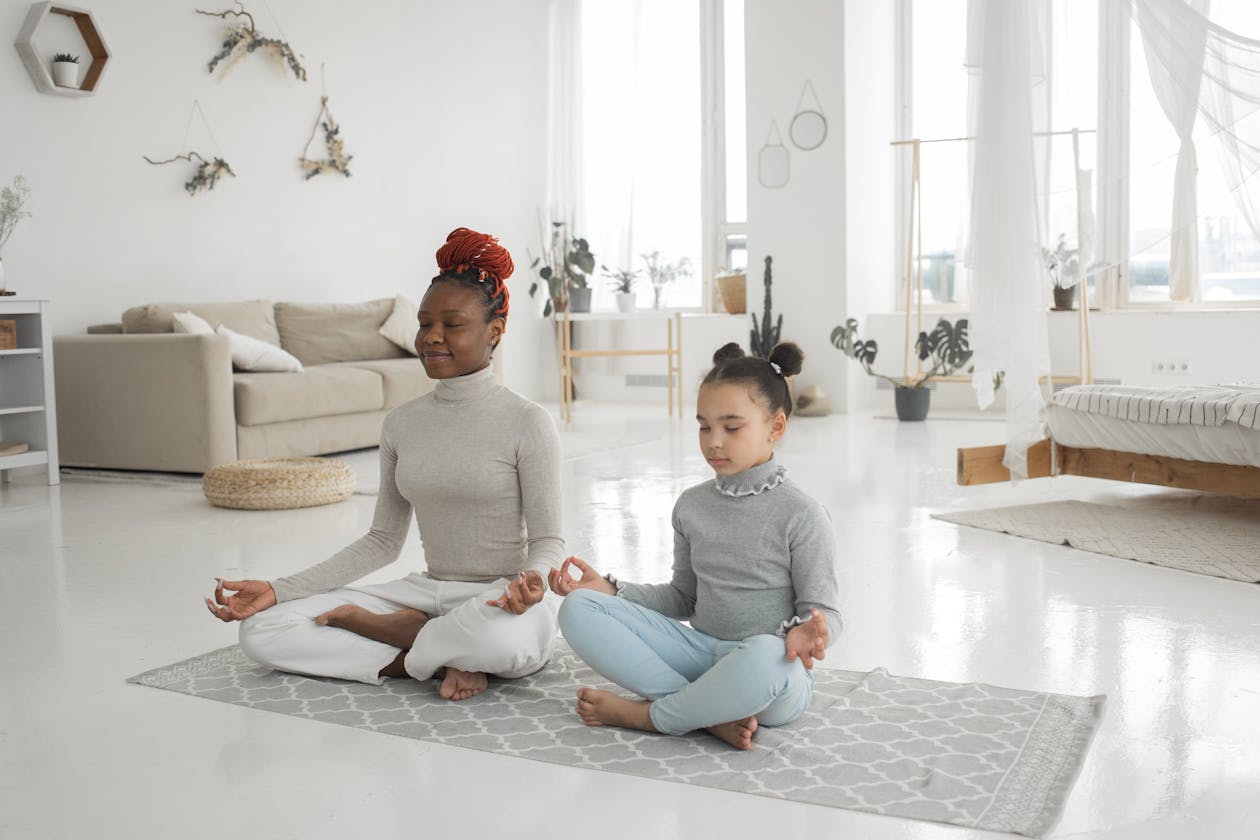
    Mother meditating with her daughter in lotus pose at home - meditation for busy moms
    Photo by Monstera Production from Pexels

    Introduction

    You love your kids. But some days the mental load — the endless to-do lists, the decision fatigue, the touched-out overwhelm — makes you feel like you’re running on fumes before noon. You’ve heard meditation helps. You’ve probably tried once or twice, gotten interrupted by a crying child, and quietly decided it’s not for you.

    Meditation for busy moms is any deliberate practice of focused attention — even just two minutes of conscious breathing — that helps you regulate stress and reconnect with the present moment amid the chaos of motherhood. It does not require a silent room, a special cushion, or an uninterrupted hour. It requires a willingness to pause.

    This guide cuts through the Instagram-perfect imagery and gives you real techniques that work in real mom life. You’ll find five-minute practices you can do anywhere, strategies for handling kid interruptions, the best apps designed for mothers, and the scientific evidence behind why even tiny meditation moments matter.

    Already thinking about sharing calm with the whole family? Check out our guide on meditation for kids to build a family-wide mindfulness practice.

    Why Meditation for Busy Moms Is Not a Luxury

    The Unique Stress Mothers Face

    Motherhood generates a specific type of stress that generic wellness advice rarely addresses. You carry the mental load — the invisible work of planning meals, scheduling appointments, remembering school forms, and anticipating everyone’s emotional needs before they even articulate them.

    This constant vigilance keeps your nervous system stuck in a low-grade fight-or-flight mode. Over time, it erodes patience, disrupts sleep, and fuels the resentment-guilt cycle that so many mothers describe but few talk about openly.

    Conventional self-care suggestions — spa days, weekend retreats, uninterrupted baths — assume blocks of free time that simply don’t exist for most mothers of young children. Meditation for busy moms works precisely because it doesn’t require those blocks. It meets you where you are: in the car, at the kitchen counter, in the three minutes between loading the dishwasher and hearing “Mom!” from the next room.

    What Science Says About Moms and Meditation

    The research on meditation specifically for mothers is growing rapidly, and the findings are compelling:

    • According to a 2022 PLOS One study, relaxation interventions during pregnancy significantly reduced maternal cortisol levels and improved newborn outcomes including birth weight. The interventions were brief, guided sessions — not hour-long retreats.
    • According to a randomized controlled trial published in BMC Pregnancy and Childbirth (2019), mindfulness-based childbirth and parenting programs improved psychological health during the postpartum period, with 15–85% of new mothers otherwise experiencing postpartum blues or depression.
    • According to NCHS population-level data, women are nearly twice as likely as men to adopt meditation (10.3% vs. 5.2%), suggesting that women — and mothers in particular — intuitively gravitate toward contemplative practices when stress escalates.

    The common thread across these studies: benefits appear with brief, consistent practice, not marathon sessions. Five minutes daily outperforms 30 minutes once a week.

    Quick Meditation Techniques You Can Do in Under 5 Minutes

    The 60-Second Breath Reset

    This is the single most accessible meditation for busy moms because you can do it absolutely anywhere — waiting at the school pickup line, hiding in the bathroom, or standing at the stove.

    How to do it: Inhale through your nose for a count of four. Exhale through your mouth for a count of six. Repeat for 60 seconds. The longer exhale activates your parasympathetic nervous system, which signals your body to shift out of stress mode.

    You don’t need to close your eyes. You don’t need silence. You just need to notice your breath for one single minute. According to research reviewed by the Calm clinical team (2025), even one round of slow breathing interrupts the spiral of urgency many mothers live inside all day.

    Sensory Grounding for Instant Calm

    When your mind is spinning with a dozen unfinished tasks, sensory grounding pulls your attention back to the physical present.

    How to do it: Look around and name one thing you can see, one thing you can hear, and one thing you can feel against your skin. Spend 20–30 seconds on each. That’s it.

    This technique doubles as a co-regulation tool with your children. Kids can join in — “Let’s find three things we can hear right now” — which turns your meditation moment into a shared calming activity rather than something you have to squeeze in away from them.

    Woman practicing prayer pose meditation by a bright window - quick meditation technique for busy moms
    Photo by ROMAN ODINTSOV from Pexels

    The Transition Pause

    Motherhood means constant role-switching: employee to parent, referee to comforter, cook to homework helper. The transition pause creates a soft bridge between those roles.

    How to do it: Before entering a new space or starting a new task, take one slow breath and feel your feet on the ground. One breath. Five seconds. Done.

    The power of this practice is cumulative. Over the course of a day, ten transition pauses add up to meaningful nervous-system regulation — without carving out any dedicated “meditation time” at all.

    Body Scan at Bedtime

    If you’re too exhausted for any other technique by the time your head hits the pillow, the bedtime body scan is for you.

    How to do it: Lying in bed, slowly bring your attention from your forehead to your toes. Notice each area without trying to change anything. When your mind wanders to tomorrow’s to-do list, gently return to the body part where you left off.

    Even a partial scan — just forehead to shoulders — can improve sleep quality. According to the Oura Ring research team (2025), body scan meditation helps regulate the nervous system and is especially effective for mothers navigating the sleep disruption that comes with pregnancy, postpartum, and toddlerhood.

    How to Build a Meditation Habit When You Have Zero Time

    The 2-Minute Rule for Beginners

    Start ridiculously small. Two minutes. Not five, not ten — two. Anyone can sit still for 120 seconds, and the psychological barrier to starting is near zero.

    The key is habit stacking: attach your two-minute meditation to something you already do every day without fail. Right after you pour your morning coffee. Right after you brush your teeth at night. Right after you buckle your seatbelt in the car. The existing habit becomes your trigger.

    According to behavioral science research from BJ Fogg’s Stanford Behavior Design Lab, starting with a “tiny habit” dramatically increases the likelihood of long-term adoption compared to ambitious goals that feel overwhelming from day one.

    Finding Your Meditation Moment

    The “best” time to meditate is not dawn on a mountaintop — it’s whenever you’ll actually do it. Here are the windows that work for real mothers:

    • Before the kids wake up — even 5 minutes earlier can create a pocket of quiet
    • During nap time — before you start chores, not after
    • In the car during school pickup — arrive 5 minutes early and sit with your breath
    • During pumping or nursing sessions — you’re already sitting still
    • After bedtime — before you pick up your phone

    Consistency beats duration every time. Two minutes every day for a month will transform your stress response more than 30 minutes once a month.

    What to Do When Kids Interrupt

    Kids will interrupt your meditation. This is not failure — it is the actual practice of real-life mindfulness. Here are four strategies that work:

    1. Address and return: Handle the need briefly (“Yes, you can have water”), then resume your practice. No guilt required.
    2. Include them: “Let’s take three deep breaths together.” You just taught your child a coping skill while still getting your moment.
    3. End gracefully: “I was meditating. I’m done now.” Short sessions still count.
    4. Reframe the interruption: Each time you notice your attention pulled away and gently bring it back, you’re doing the exact same mental exercise as uninterrupted meditation. The wandering and returning is the practice.

    Best Meditation Apps for Busy Moms (2026)

    Quick-Session Apps Worth Trying

    The right app can make the difference between “I’ll start tomorrow” and “I just did it.” Here are the top options for mothers who need short, guided sessions:

    • Calm — The #1 meditation app by revenue ($7.68 million in early 2024 in-app purchases alone, according to Statista’s 2024 app revenue data). Offers daily calm sessions as short as 3 minutes, sleep stories, and specific programs for stress and anxiety. Beautiful, intuitive interface.
    • Headspace — Friendly and beginner-focused with short sessions specifically designed for busy schedules. Good visual animations that explain meditation concepts quickly.
    • Insight Timer — The best free option. Over 100,000 guided meditations, a simple timer function, and a large community. No subscription required for core features.
    • Expectful — Designed specifically for pregnancy and motherhood. Meditation for busy moms at every stage: trying to conceive, pregnant, postpartum, and beyond. Created with perinatal mental health experts.
    Woman relaxing with smartphone - best meditation apps for busy moms in 2026
    Photo by Ketut Subiyanto from Pexels

    Free vs Paid: What Actually Matters

    For beginners, start with Insight Timer’s free library. It has everything you need — guided sessions, timers, and ambient sounds — without spending a dollar. If you find yourself wanting more structure, curated courses, or sleep-specific content, then consider a paid subscription to Calm or Headspace.

    The most expensive app in the world won’t help if you don’t open it. The best app is the one you’ll actually use.

    Micro-Meditation Trends Moms Should Know in 2026

    AI-Powered Personalized Meditation

    The biggest shift in meditation for busy moms in 2026 is AI-personalization. New meditation apps adjust in real time based on your stress levels, breathing patterns, and even wearable data from devices like Oura rings and Apple Watches.

    According to the Whole Living 2026 mindfulness report, AI-powered meditation tools now customize session length, technique selection, and even voice guidance style based on your current state. For mothers, this means no more scrolling through hundreds of options when you’re already overwhelmed — the app meets you where you are.

    Eco-Mindfulness and Nature-Based Practices

    According to mindfulness trend analysis from Roundhouse NYC (2026), eco-mindfulness approaches like forest bathing and outdoor walking meditation are surging in popularity. These practices combine traditional meditation with nature immersion, and they’re particularly appealing for mothers because you can do them with your children.

    A 20-minute walk through a park where you notice sounds, textures, and smells counts as meditation. Your toddler pointing at a bug counts as a mindfulness moment. Nature-based practice removes the pressure of “doing it right” and makes meditation a shared family experience.

    Key Statistics & Data

    1. According to NCHS population data, 10.3% of U.S. women meditate compared to 5.2% of men — women are nearly twice as likely to adopt the practice.
    2. According to the Mindfulness Box global survey (2026), approximately 275 million people worldwide practice meditation, with 92% citing stress relief as their primary motivation.
    3. According to Statista’s 2023 market report, the global meditation app market generated $1.4 billion in revenue and is projected to grow to $7.25 billion by 2033.
    4. According to a 2022 PLOS One study, relaxation interventions during pregnancy reduced maternal cortisol levels and improved newborn birth weight outcomes.
    5. According to a BMC Pregnancy and Childbirth RCT (2019), 15–85% of new mothers experience postpartum blues, and mindfulness-based programs significantly improved psychological health during the postpartum period.
    6. According to the Mindfulness Box survey (2026), long-term meditators report up to 60% reductions in anxiety after 6–9 months of consistent practice.
    7. According to Statista’s 2024 app revenue data, Calm earned $7.68 million through in-app purchases in early 2024, ranking #1 among meditation apps globally.
    8. According to NCHS data, 15.9% of U.S. adults aged 45–64 meditate — the highest rate among all age groups.

    Frequently Asked Questions

    How can a busy mom start meditating?

    Start with just two minutes of focused breathing each day. Attach it to an existing habit — after morning coffee or before bed — so you don’t have to remember separately. Use a free app like Insight Timer for guided support, and don’t worry about doing it “right.” Any deliberate pause counts.

    How many minutes should a mom meditate per day?

    Two to five minutes is enough for beginners. Research shows benefits appear with brief, consistent daily practice. You can gradually increase to 10–20 minutes if desired, but never feel like short sessions don’t count. Consistency matters far more than duration.

    Can meditation help with mom burnout?

    Yes. Meditation for busy moms directly addresses the core drivers of burnout: chronic stress, emotional exhaustion, and decision fatigue. Even brief daily practice lowers cortisol, improves emotional regulation, and expands your capacity to handle the mental load without reaching the breaking point.

    What is the best time of day for moms to meditate?

    There is no universal best time. The best time is whatever fits your specific routine consistently — before kids wake, during nap time, in the car at pickup, or after bedtime. Pick one window, commit to it for a week, and adjust if needed.

    Do I need an app to start meditating?

    No. You can meditate with nothing but your breath. Apps provide guidance, structure, and accountability — helpful for beginners — but they are optional. Start with the 60-second breath reset (inhale for 4, exhale for 6) and you have everything you need.

    Conclusion

    Meditation for busy moms is not about adding one more task to your impossible to-do list. It’s about finding two-minute pockets of calm inside the chaos you already live in — and discovering that those tiny pauses change everything.

    The science is clear: brief, consistent meditation reduces cortisol, sharpens focus, improves sleep, and builds the emotional reserves you need to parent with patience instead of reactivity. You don’t need an hour. You need two minutes, a willingness to start, and permission to do it imperfectly.

    Pick one technique from this guide — the breath reset, the sensory check-in, the transition pause — and try it tomorrow morning. Not next Monday. Not after the kids are older. Tomorrow. Your nervous system will thank you.

    Want to bring calm to the whole family? Read our complete guide to meditation for kids and start building a household mindfulness practice together.
  • Meditation for Kids: Benefits, Techniques & Expert Tips

    Meditation for Kids: Benefits, Techniques & Expert Tips

    TL;DR

    Meditation for kids is one of the fastest-growing wellness practices in the United States. Meditation use among U.S. children ages 4 to 17 surged from 0.6% to 5.4% between 2012 and 2017, according to the CDC and the National Center for Complementary and Integrative Health (NCCIH). School-based mindfulness programs are now operating in thousands of classrooms nationwide, with a 2025 survey of over 1,000 school-based therapists revealing that 75% of children struggle with self-regulation. Research published in Frontiers in Psychology shows mindfulness improves children’s executive function by up to 35%, while studies in the Journal of Pediatrics link meditation for kids to reduced anxiety, better sleep, and improved classroom behavior. This guide covers the science-backed benefits, age-specific techniques from ages 3 to 13, and expert tips from child psychologists and educators.

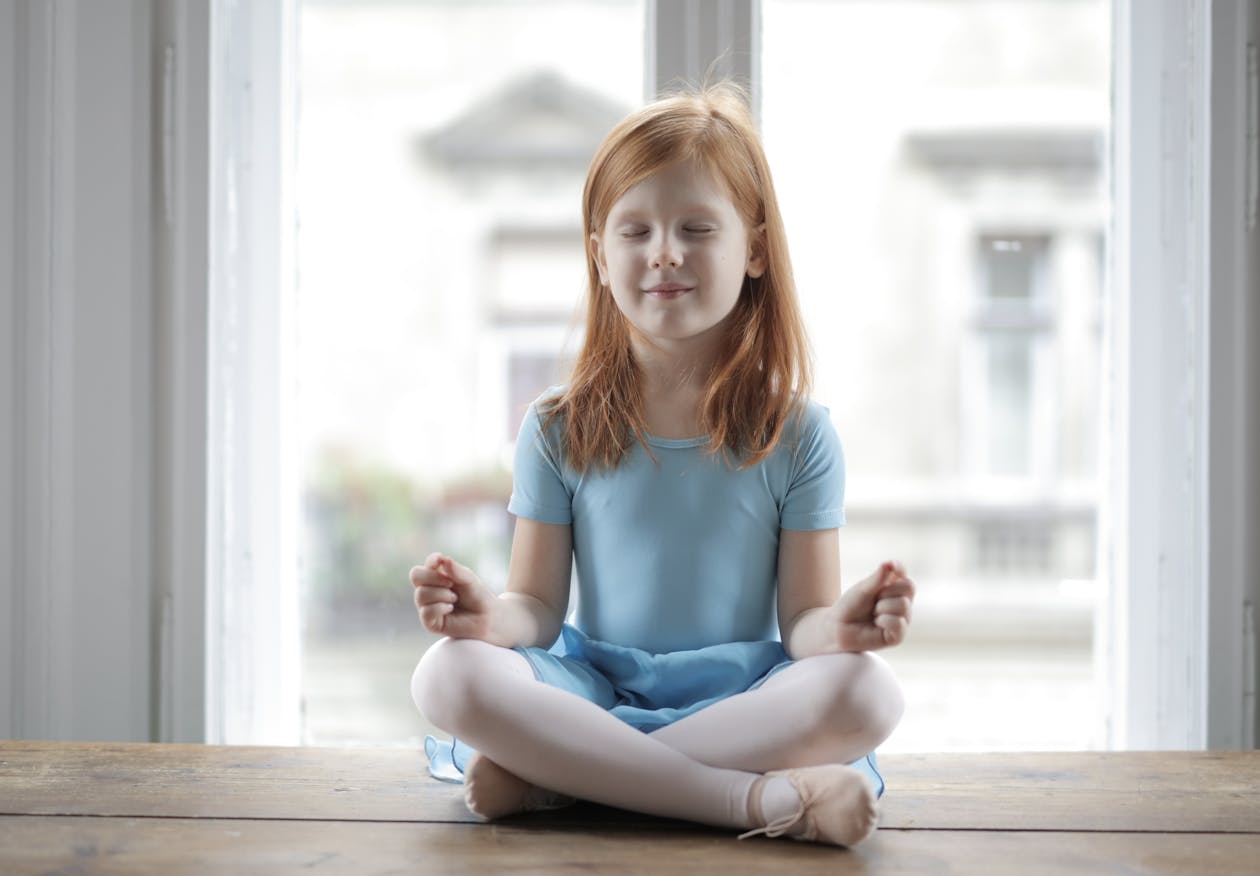
    Meditation for kids: young girl sitting in meditation pose with serene expression, practicing mindfulness
    Photo by Andrea Piacquadio from Pexels

    Introduction

    A 2025 nationwide survey of over 1,000 school-based therapists and educators found that 75% of children struggle with self-regulation — the ability to manage emotions, behavior, and attention. The finding, reported by Kids Yoga Stories and Your Therapy Source, points to a growing crisis in children’s mental health and emotional development.

    Meditation and mindfulness are emerging as practical, evidence-based tools to address this gap. Once considered an adult-only practice, meditation for kids is now recommended by organizations like the American Academy of Pediatrics, the Child Mind Institute, and the Cleveland Clinic as a daily habit for children as young as age three.

    This guide pulls together the latest research, breaks down benefits by category, provides age-specific techniques you can start tonight, and explores how schools are bringing mindfulness into the classroom.

    What the Research Says — Meditation for Kids Benefits

    Improved Focus and Academic Performance

    A study published in Frontiers in Psychology found that children who practiced mindfulness showed a 35% improvement in executive function tasks — the mental skills that include focus, planning, and impulse control. This directly translates to better academic performance and classroom behavior.

    How it works: Meditation strengthens the prefrontal cortex, the brain region responsible for attention and decision-making. According to Dr. Richa Bhatia, a psychiatrist and mindfulness researcher, regular practice helps children “train their attention muscle” — making it easier to concentrate during lessons, complete homework, and resist distractions.

    Schools implementing mindfulness programs report measurable results. A 12-week pilot study published in the Journal of Occupational Therapy in Schools found that kindergarten through second-grade students who received 20-minute mindfulness sessions 1-2 times per week showed significant improvements in classroom attention and reduced disruptive behavior.

    Reduced Anxiety and Stress

    Anxiety disorders affect approximately 7% of children ages 3-17 in the United States, according to the CDC. Meditation provides a drug-free, accessible intervention. The Child Mind Institute reports that mindfulness techniques help children “combat stress and alleviate mental health and learning disorders” by teaching them to observe their thoughts without being overwhelmed by them.

    A meta-analysis published in Springer’s Systematic Reviews journal reviewed mindfulness-based interventions for children and adolescents and found consistent reductions in anxiety and depressive symptoms across multiple studies. Breathing exercises, in particular, activate the parasympathetic nervous system, lowering heart rate and cortisol levels within minutes.

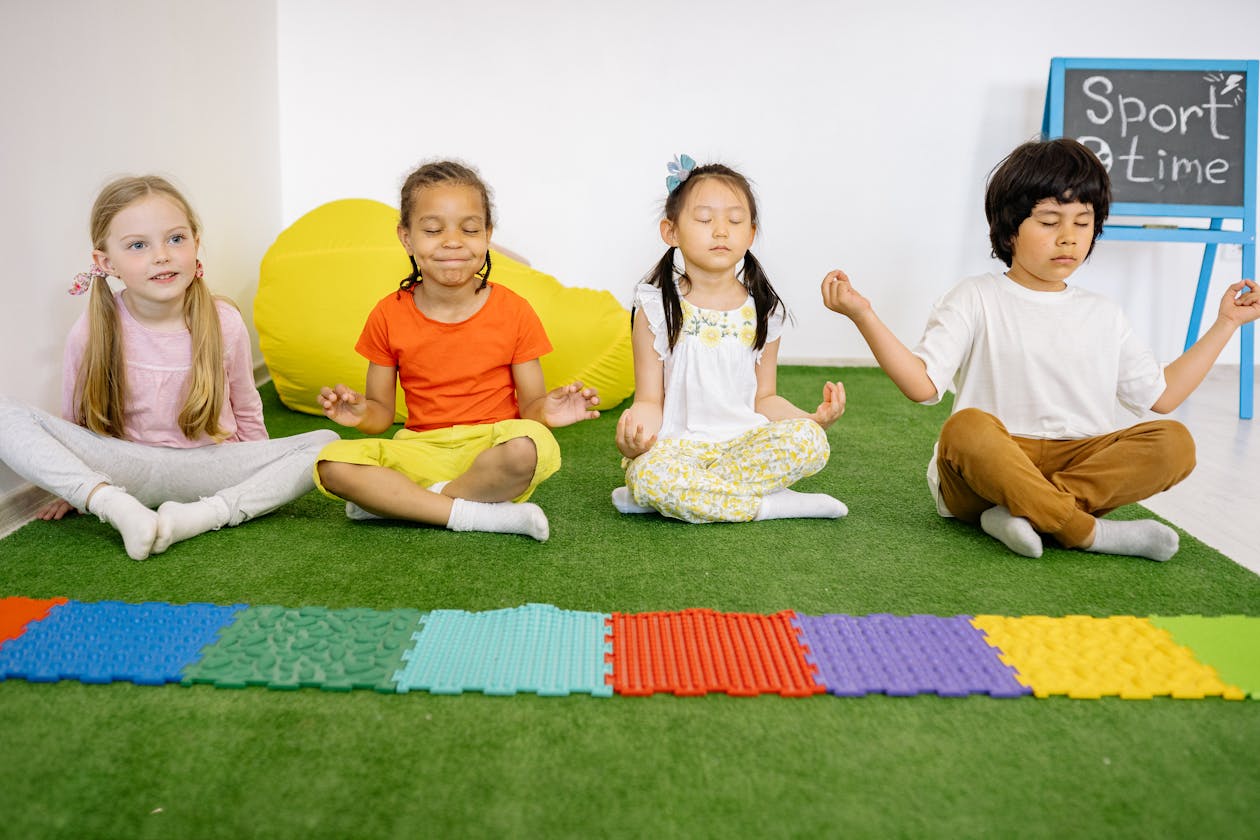
    Diverse group of children meditating together in a classroom yoga session, practicing mindfulness as a group
    Photo by Yan Krukau from Pexels

    Better Emotional Regulation and Behavior

    Emotional regulation — the ability to manage frustration, anger, and excitement appropriately — is one of the most important skills children develop. Meditation directly strengthens this capacity. The Wiley Journal of Paediatrics and Child Health published a review identifying “improvements in mood and mental health conditions, school attendance and attention in the classroom” in children and adolescents who practiced meditation regularly.

    Practically, this means fewer tantrums in younger children and better conflict resolution skills in older kids. The Cleveland Clinic notes that meditation teaches children to pause before reacting — a skill that carries over into friendships, family dynamics, and academic settings.

    Enhanced Sleep Quality

    Up to 30% of children experience sleep problems, according to the American Academy of Pediatrics. Meditation and guided relaxation before bed help children transition from an alert state to a calm one. Body scan meditations and guided imagery — where children visualize peaceful scenes — are particularly effective for reducing bedtime anxiety and the racing thoughts that keep kids awake.

    The American Academy of Pediatrics recommends mindfulness as part of a healthy sleep hygiene routine, alongside consistent bedtimes and reduced screen time before bed.

    At What Age Can Kids Start Meditating?

    There’s no single “right age” — but child development experts agree that adapted techniques can begin as early as age 3. The key is matching the practice to the child’s developmental stage.

    Ages 3-5: Simple Sensory Exercises

    Preschoolers can’t sit still for long — and that’s fine. The goal is introducing the concept of paying attention on purpose. Effective techniques include:

    • Listening bells: Ring a bell or chime and ask the child to raise their hand when they can no longer hear the sound
    • Smell and tell: Present scented items (cinnamon, orange peel, lavender) and ask the child to describe what they notice
    • Teddy bear breathing: Place a stuffed animal on the child’s belly and watch it rise and fall with each breath — 1-2 minutes is plenty

    Keep sessions to 1-3 minutes and always make it playful, not disciplinary.

    Ages 6-9: Breathing and Body Scans

    School-age children can handle slightly longer practices with more structure. Recommended techniques:

    • Belly breathing: Inhale for 4 counts, hold for 2, exhale for 6 — repeat 5 times
    • Body scan: Guide the child to focus on each body part from toes to head, noticing how each area feels
    • Cloud watching: Lie outside and observe clouds — noticing when the mind wanders and gently bringing attention back

    Sessions of 3-5 minutes work well. Many educators incorporate these into classroom transitions.

    Ages 10-13: Full Guided Meditations

    Pre-teens and young teens can engage with traditional meditation techniques adapted for their age. This includes:

    • Guided visualizations: Imagining a safe, calm place in detail — what they see, hear, smell, and feel
    • Gratitude meditation: Spending 3 minutes mentally listing things they’re grateful for
    • Loving-kindness meditation: Silently repeating phrases like “May I be happy, may I be safe, may I be kind”
    • Mindful journaling: Writing about their current emotions without judgment for 5 minutes

    Sessions of 5-10 minutes are appropriate. Apps like Calm, Headspace, and Smiling Mind offer age-specific guided meditations for this group.

    Best Meditation for Kids Techniques by Age

    Belly Breathing (All Ages)

    The simplest and most universally effective technique. Have the child place one hand on their chest and one on their belly. Inhale slowly through the nose — the belly should rise while the chest stays still. Exhale slowly through the mouth. Repeat 5-10 times.

    The American Academy of Pediatrics recommends belly breathing as a first-line technique for managing acute stress and anxiety in children. It’s discrete enough to use in a classroom or before a test.

    The Body Scan (Ages 6+)

    Have the child lie down and close their eyes. Guide them to bring attention to their toes, then feet, then ankles, slowly moving up the body to the head. At each body part, ask them to notice any sensations — warmth, tingling, tension — without trying to change anything.

    Body scans teach children to recognize physical signs of stress (tight shoulders, clenched jaw) before those signals escalate into emotional outbursts. A full scan takes 3-5 minutes.

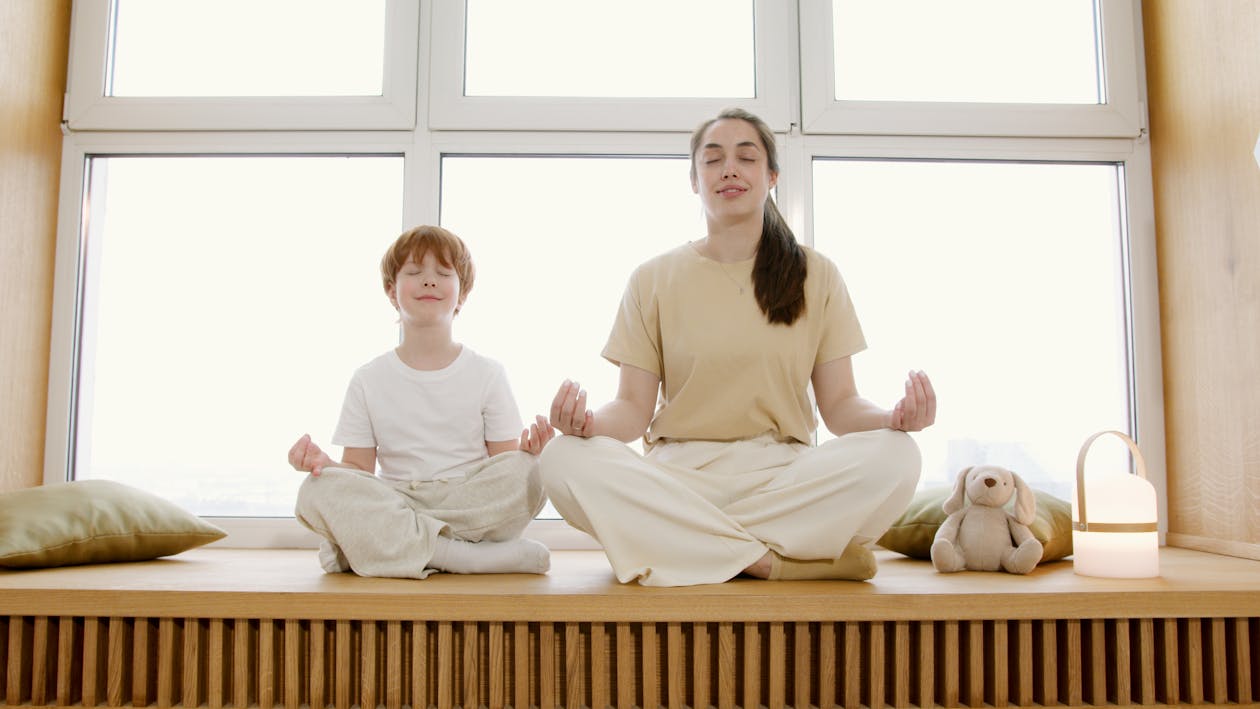
    Mother and son practicing yoga and meditation together at home, demonstrating family mindfulness bonding
    Photo by Artem Podrez from Pexels

    Guided Imagery and Story Meditations

    Children have vivid imaginations — leverage that. Guide them through a story where they walk through a peaceful forest, float on a cloud, or explore an underwater world. Include sensory details: “Feel the warm sand between your toes,” “Hear the gentle waves rolling in.”

    Calm and Headspace both offer popular story-based meditations for kids. You can also create your own scripts tailored to your child’s interests — a dinosaur lover might visualize a calm walk through a prehistoric jungle.

    Mindful Walking and Movement

    Not all meditation happens sitting still. Mindful walking involves moving slowly and paying close attention to each step — the feeling of the foot lifting, moving through the air, and touching the ground. This works especially well for kinesthetic learners and children with ADHD who struggle with seated meditation.

    Yoga-based movement is another option. The Kids Yoga Stories program combines simple poses with mindfulness prompts and is used in thousands of classrooms.

    Gratitude Journaling as Meditation

    For children who resist traditional meditation, gratitude journaling offers a mindfulness-adjacent practice. Each evening, the child writes or draws three things they’re grateful for. This shifts focus from worries to positive experiences and builds a reflective habit.

    Research from UC Berkeley’s Greater Good Science Center found that gratitude practices in children are associated with higher levels of optimism, life satisfaction, and social connection.

    Meditation in Schools — The Growing Movement

    What School-Based Mindfulness Programs Look Like

    Mindfulness programs in schools range from informal “brain breaks” to structured curricula. A typical program involves 5-20 minute sessions, 2-5 times per week, integrated into the school day. Common elements include guided breathing, body scans, mindful listening, and reflective journaling.

    Programs like MindUP, Inner Explorer, and Mindful Schools provide structured curricula used in thousands of US classrooms. A whole-school implementation framework published in the Journal of School Psychology recommends integrating mindfulness at three levels: individual student practice, classroom-wide routines, and school-wide culture shifts.

    Results From Classroom Studies

    The evidence is growing. A 2024 study published in Nature’s Scientific Reports examined mindfulness-based interventions for children and found measurable improvements in well-being and mental health outcomes. The Wiley Journal of Paediatrics and Child Health reviewed multiple meditation types — including Transcendental Meditation and mindfulness-based stress reduction — and identified consistent benefits for school attendance, attention, and emotional health.

    However, researchers caution that program quality matters. A 2025 investigation by The Conversation found that while mindfulness is “gaining traction in American schools,” the content and quality of programs varies widely. Experts urge schools to use evidence-based curricula rather than ad hoc approaches.

    Key Statistics and Data

    1. 5.4% of U.S. children ages 4-17 used meditation in 2017, up from 0.6% in 2012 — a 9x increase (CDC/NCCIH National Health Interview Survey)
    2. 75% of children struggle with self-regulation, per a 2025 survey of 1,000+ school therapists (Kids Yoga Stories/Your Therapy Source)
    3. 35% improvement in executive function in children who practice mindfulness (Frontiers in Psychology)
    4. 7% of U.S. children ages 3-17 have diagnosed anxiety (CDC)
    5. 30% of children experience sleep problems (American Academy of Pediatrics)
    6. Meditation use among children grew significantly between 2012 and 2017, alongside yoga (NCCIH)
    7. 12-week school mindfulness programs show significant improvement in classroom attention and behavior (Journal of Occupational Therapy in Schools, 2025)
    8. Gratitude practices in children linked to higher optimism and social connection (UC Berkeley Greater Good Science Center)

    Frequently Asked Questions

    At what age can kids start meditating?

    Children can begin adapted mindfulness exercises as early as age 3. For preschoolers, techniques involve sensory activities (listening to a bell, noticing scents) lasting just 1-3 minutes. Structured breathing and body scans are appropriate from age 6, and full guided meditations from age 10. The key is matching the technique to the child’s developmental stage and keeping it playful.

    How does meditation help children with anxiety?

    Meditation activates the parasympathetic nervous system, which lowers heart rate and cortisol levels — the body’s physical stress response. For children with anxiety, breathing exercises provide an immediate coping tool they can use anywhere. Over time, regular practice teaches children to observe anxious thoughts without being controlled by them, building long-term resilience. The Child Mind Institute recommends mindfulness as a frontline intervention for childhood anxiety.

    What are the best meditation techniques for kids?

    The best technique depends on age and temperament. For all ages, belly breathing is the most accessible starting point. Ages 3-5 benefit from sensory exercises like teddy bear breathing and listening bells. Ages 6-9 do well with body scans and cloud watching. Ages 10-13 can engage with guided visualizations, gratitude meditation, and mindful journaling. For kids who can’t sit still, mindful walking and yoga-based movement are excellent alternatives.

    How long should a child meditate?

    A general guideline: 1 minute per year of age. A 4-year-old might meditate for 3-4 minutes, a 7-year-old for 5-7 minutes, and a 12-year-old for 10-12 minutes. Consistency matters more than duration — 3 minutes every day is more effective than 20 minutes once a week. The Cleveland Clinic and the American Academy of Pediatrics both emphasize starting small and building gradually.

    Does meditation for kids improve focus in school?

    Yes. Research published in Frontiers in Psychology shows a 35% improvement in executive function — the cognitive skills that include sustained attention and impulse control. Classroom studies confirm these findings: students in school-based mindfulness programs show better attention, fewer disruptive behaviors, and improved academic performance. The mechanism is strengthening of the prefrontal cortex through repeated practice.

    Conclusion

    The evidence is clear: meditation for kids is no longer just an adult practice. With research backing from the CDC, Frontiers in Psychology, and the American Academy of Pediatrics, mindfulness has become one of the most accessible, low-cost tools for improving children’s mental health, focus, and emotional resilience.

    The approach is simple. Start with one minute per year of age. Pick a technique that fits your child — belly breathing for beginners, body scans for school-age kids, guided imagery for pre-teens. Do it at the same time each day, keep it playful, and let your child see you practicing too. Children learn mindfulness by watching, not just by being told.

    Your next step: Tonight, try belly breathing with your child for two minutes before bed. Place a hand on their belly, breathe in slowly through the nose, and watch the belly rise. That’s it. One small habit that, with consistency, can transform how your child handles stress, focus, and emotions for the rest of their life.