TL;DR — Key Takeaways
- You don’t need psychic ability to read tarot cards — you need a Rider-Waite deck, a willing participant, and one rule: describe what you see, don’t interpret what it means. This is the pareidolia-based method adapted from the work of Yale psychiatrist Dr. Charles Morgan III.
- The Rider-Waite deck’s rich, detailed illustrations — created by artist Pamela Colman Smith in 1909 — are purpose-built for this technique. Each card contains multiple visual elements that serve as pareidolia hooks, giving the subject’s brain plenty of ambiguous material to project onto.
- The method works because of neuroscience, not magic: the brain’s fusiform face area fires at 170 milliseconds when viewing symbolic imagery, and emotional priming biases the subject toward finding personally relevant meaning — as demonstrated in Kang Lee’s 2014 fMRI research at the University of Toronto.
Introduction — A Different Kind of Tarot Reading
The first article in this series, Pareidolia and Tarot: Why Your Brain Sees Meaning in Every Card, explored the neuroscience behind why tarot feels so accurate — the fusiform face area, dopamine-driven pattern detection, and the projective hypothesis that connects a deck of cards to a century of clinical psychology.
This article picks up where that one left off, with a practical question: How do you actually do it?
What follows is a step-by-step method for conducting a tarot reading using the pareidolia framework — specifically with the Rider-Waite-Smith deck, the most widely available and visually rich deck in the world. No psychic powers required. No memorized guidebook meanings. No mysticism. Just a deck of cards, an understanding of how the brain constructs meaning, and a willingness to let the subject’s mind do the work.
The approach is adapted from the demonstration method used by Dr. Charles Morgan III — the Yale psychiatrist and former CIA intelligence officer who gave over 400 readings without ever hearing the sitter’s question, proving that the meaning comes entirely from within.
Why Rider-Waite? The Deck Built for Projection
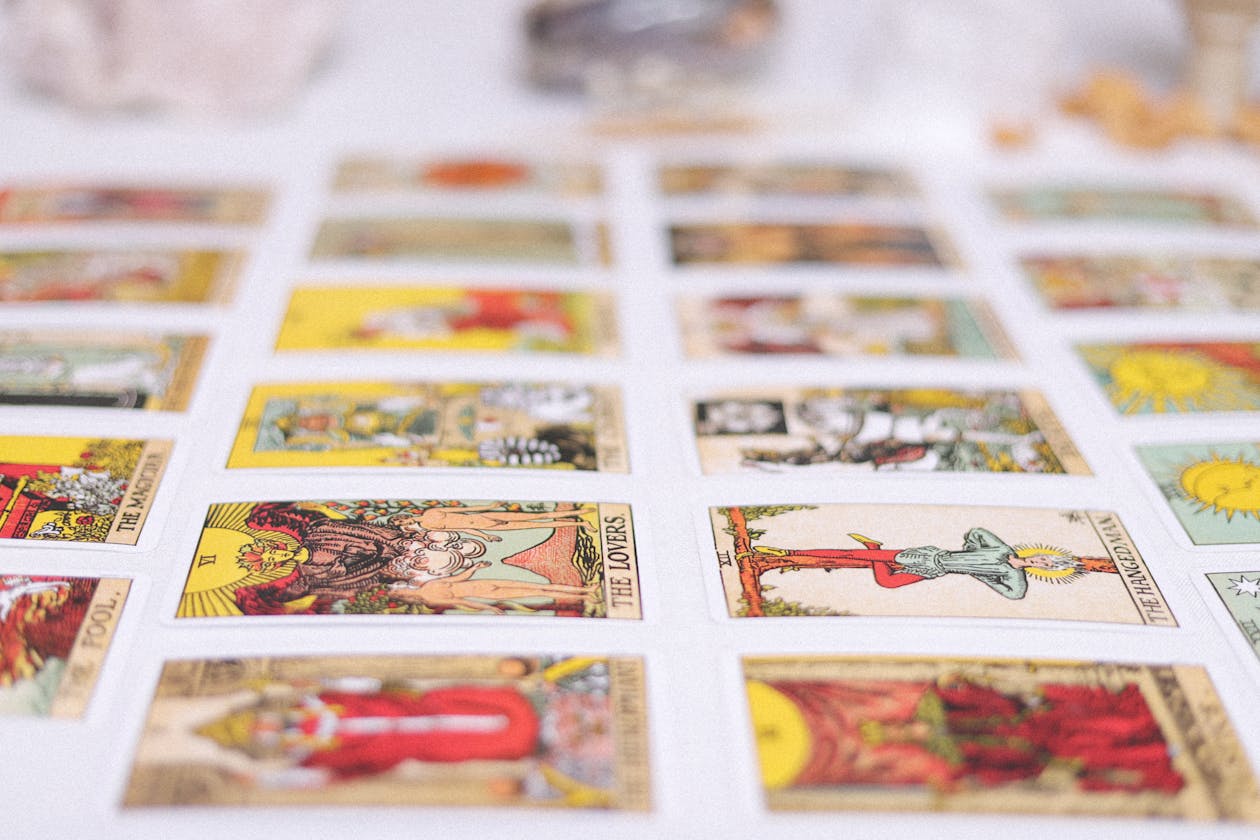
The Rider-Waite-Smith tarot deck, first published in 1909, was illustrated by Pamela Colman Smith under the direction of mystic A.E. Waite. It was revolutionary for one critical reason: it was the first tarot deck to illustrate all 78 cards with full scenic imagery, not just the 22 Major Arcana.
Before Rider-Waite, the 56 Minor Arcana cards (the suits of Cups, Wands, Swords, and Pentacles) were typically shown as simple arrangements of symbols — five swords arranged in a pattern, three cups in a row. Smith changed this completely. She painted full narrative scenes for every single card: a figure weeping over three spilled cups while ignoring two still standing. A man clinging to eight wands as they fly through the air. A child gently taming a lion.
From a pareidolia standpoint, this makes Rider-Waite the ideal tool. Consider what’s happening visually in a single card — the Six of Swords:
- A cloaked figure hunched in a boat, face hidden
- A small figure — perhaps a child — sitting beside them
- A ferryman standing at the rear, steering with a long pole
- Six upright swords fixed along the side of the boat
- Choppy, turbulent water behind the boat
- Calm, still water ahead
- A distant shoreline barely visible through mist
Every element is a pareidolia hook. The subject’s eye will land on whichever detail resonates with their situation — the choppy water, the hidden face, the distant shore, the child. And the element they notice will feel like the card “spoke to them,” because their brain selectively attended to the detail that matched what was already on their mind.
This is not a design flaw. This is the mechanism.
The Pareidolia Method: Step-by-Step
Step 1: Prepare Yourself — Unlearn What You Know
Before the reading, there is one critical preparation that separates this method from traditional tarot: deliberately set aside memorized card meanings.
The goal is not to be the expert who knows what the Tower “really means.” The goal is to be a facilitator — someone who presents rich visual material and creates the conditions for the subject’s mind to project meaning onto it. Think of yourself not as a fortune teller but as the person administering a Rorschach test: your role is to present the stimulus and observe what happens, not to supply the interpretation.
If you’ve studied traditional card meanings, that knowledge will still inform your eye — but lead with what you see, not what you know.
Step 2: Set the Rules — The Secret Question
When the subject sits down, explain the ground rules clearly:
- “Think of one important question — something that genuinely matters to you.” It can be about relationships, career, health, a decision, a conflict — anything real.
- “Don’t tell me what it is. Keep it entirely in your head.” This is the single most important rule. It eliminates cold reading, fishing, and all conventional explanations for why the reading might feel accurate.
- “Hold the question in your mind while you shuffle.” Have them shuffle the deck thoroughly while focusing on their question. This is the emotional priming that makes the pareidolia engine run at full power.
- “Cut the deck and hand it back to me when you’re ready.”
As Dr. Morgan explained in his demonstrations, keeping the question secret is what forces pure projection. The only variables left are the ambiguous imagery on the cards and the subject’s own psychological material. Everything the subject experiences as “accurate” comes from within.
Step 3: Choose Your Spread
For beginners using this method, two spreads work particularly well:
The Three-Card Spread (Past / Present / Future)
Simple, fast, and provides a natural narrative arc. Lay three cards face down, then turn them over one at a time, describing each before moving to the next. The structure gives the subject a story framework to map their situation onto.
The Five-Card Cross Spread
Lay five cards in a cross pattern — one center, one above, one below, one left, one right. This gives more visual complexity and allows the subject to see connections between cards, which intensifies the narrative construction. The center card often functions as the “core” that the subject’s eye returns to repeatedly.
Avoid large spreads (like the full Celtic Cross with ten cards) for your first attempts — too much visual information can overwhelm the pareidolia mechanism. Start with three or five cards and build up.
Step 4: Describe, Don’t Interpret
This is the core technique. When you turn over each card, describe what you see in the image — out loud, in plain language. Do not assign meaning. Do not say what the card “represents.” Simply narrate the visual content.
Here is the difference, using three common cards as examples:
The Difference Between Describing and Interpreting
The Tower:
- ❌ “This card represents sudden upheaval and destruction.”
- ✅ “There’s a tall tower being struck by lightning. The top is crumbling. Two figures are falling from it headfirst. A crown is tumbling off the top. The ground looks cracked and broken.”
The Three of Swords:
- ❌ “This is about heartbreak and sorrow.”
- ✅ “I see a large red heart floating in the air. Three swords are piercing straight through it. The background is dark grey, and there’s heavy rain falling.”
The Empress:
- ❌ “This card signifies abundance and motherhood.”
- ✅ “A woman sits on a throne in the middle of a green field. She’s wearing a flowing dress with a crown of twelve stars above her head. Trees and wheat surround her. She’s holding a scepter shaped like a staff.”
Notice what happens in the description version: you’re providing rich, sensory detail without closing the interpretive space. The subject hears “a crown is tumbling” and their brain maps it to whatever feels relevant — a lost job, a crumbling relationship, an identity crisis. You didn’t tell them what it means. Their mind told them.
Speak slowly. Pause between details. Give the subject’s brain time to process each element and match it against their internal concern.
Step 5: Invite the Subject In
After describing the full spread, invite the subject to participate. This is where the deepest insight happens — not from your description, but from what they choose to focus on.
Ask open-ended questions:
- “Does anything here catch your attention?”
- “Is there a card that you feel drawn to?”
- “What’s the first thing your eye goes to when you look at this spread?”
- “Is there anything here that feels familiar?”
Their answer will tell you exactly where the pareidolia landed. What they notice is more important than what you described. If you spent two minutes on the Tower’s lightning bolt but the subject can’t stop staring at the tiny people falling — that’s the hook. That’s where the projection lives. Go there.
Step 6: Follow Their Lead
Once the subject identifies what caught their attention, stay with it. Don’t redirect to what you think is more important. Don’t offer interpretation. Keep describing and asking:
- “Tell me more about what you see in that part of the card.”
- “How does that make you feel, looking at it?”
- “What does that figure seem to be doing?”
- “If you were in this image, where would you be?”
These questions are not random — they are drawn directly from the clinical projective testing tradition. The Rorschach inquiry phase asks subjects to explain what about the blot made them see what they saw. The Thematic Apperception Test asks subjects to tell a complete story about the image. You’re doing the same thing, informally, with tarot cards.
Let the subject build the narrative. You facilitate. They construct. The meaning is theirs.
What If They Ask You What a Card Means?
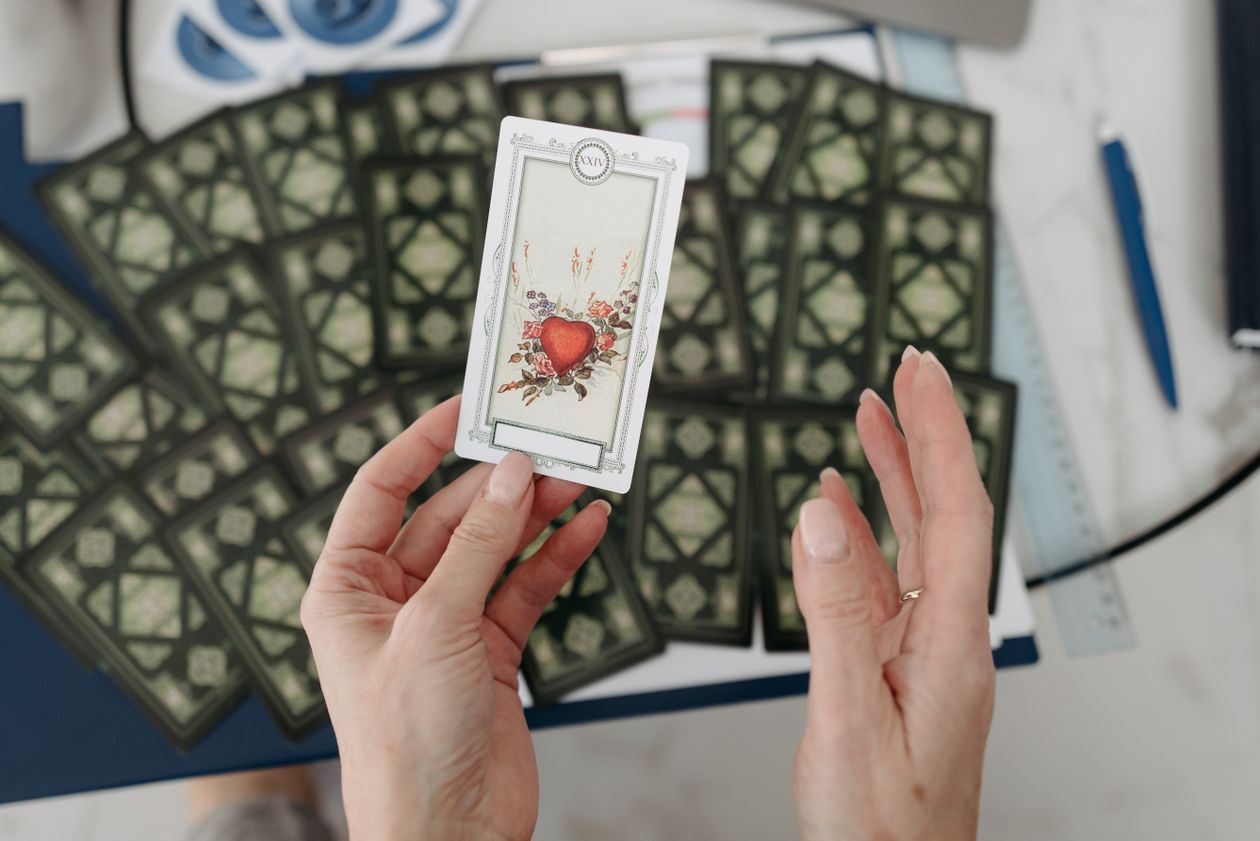
They will. People want the expert to tell them the answer. Here’s how to handle it without breaking the method:
Redirect gently to the image:
“Different traditions give different meanings to this card, and I could tell you what the books say. But what matters more is what you see in it right now. What’s your eye drawn to?”
If they push for a meaning, offer range instead of a single answer:
“The Death card has been associated with transformation, endings, and new beginnings across different traditions. But look at the image — what does it feel like to you, in this moment, with your question in mind?”
The goal is always to return the interpretive authority to the subject. You’re not withholding information. You’re preserving the space where the most meaningful insight can emerge — the space where their mind, not yours, supplies the answer.
What If Nothing Lands?
Sometimes a reading falls flat. The subject shrugs. Nothing clicks. This doesn’t mean the method failed — it usually means one of three things:
1. The question wasn’t real enough. If the subject chose a trivial or abstract question, there won’t be enough emotional investment to drive the projection. Encourage them to reshuffle with something that genuinely matters to them.
2. The spread was too small. Three cards might not provide enough visual variety. Try adding two more cards and see if the additional imagery triggers a response.
3. The subject is overthinking. Pareidolia operates at 170 milliseconds — before conscious analysis. If the subject is trying to “figure out” the “right” interpretation, they’re bypassing the mechanism entirely. Remind them: “Don’t analyze. Just notice. What catches your eye first?”
Advanced Technique: Card Pairing and Narrative Bridges
Once you’re comfortable with the basic describe-and-invite method, you can introduce a more sophisticated technique: narrative bridging between cards.
After describing each card individually, look at the spread as a whole and ask:
- “If these cards were scenes in a story, what’s happening between the first and the last?”
- “Is there a journey happening here? Where does it start and where does it end?”
- “Look at the figures across all three cards — do they seem to be the same person at different moments, or different people?”
This activates the brain’s narrative construction engine — the same one documented by Fritz Heider and Marianne Simmel in their landmark 1944 study, where participants spontaneously created elaborate stories from nothing but moving triangles. If the brain narrativizes triangles, imagine what it does with three illustrated cards laid side by side.
The key is to let the subject build the bridge. Don’t tell them the story. Ask them what story they see.

The Quick-Reference Cheat Sheet
Before each reading, review these six principles:
- Secret question. The subject never reveals their question. This eliminates cold reading and forces pure projection.
- Emotional priming. Shuffling while focusing on the question primes the brain to find relevant patterns in the card imagery.
- Describe, don’t interpret. Narrate the visual content of each card in plain language. Do not assign meaning.
- Their attention, not yours. What the subject notices matters more than what you describe. Follow their eye.
- Open questions. Invite the subject to participate with questions that open interpretive space, not close it.
- You are the facilitator, not the oracle. Your role is to hold the mirror. The subject’s mind supplies the reflection.
Frequently Asked Questions
Do I need to memorize tarot card meanings to use this method?
No. In fact, the method works better when you lead with visual description rather than memorized interpretation. Knowing traditional card meanings can inform your eye, but your primary tool is describing what you see in the image. This keeps the interpretive space open for the subject’s mind to fill.
Why does the Rider-Waite deck work best for pareidolia-based readings?
The Rider-Waite deck, illustrated by Pamela Colman Smith in 1909, is the first tarot deck to feature full narrative scenes on all 78 cards. Each card contains multiple distinct visual elements — figures, objects, landscapes, colors, weather — that provide rich material for the brain to latch onto. More visual detail means more pareidolia hooks, which means more opportunity for personally meaningful projection.
What if the subject tells me their question before the reading?
Gently redirect. Explain that the method works best when the question is kept secret, because it prevents you (the reader) from unconsciously steering the description toward their topic. If they’ve already told you, acknowledge it and ask them to hold the specifics in their mind while you focus on describing what you see without trying to match it to their situation.
Can I use this method with other tarot decks besides Rider-Waite?
Yes — any deck with rich, detailed illustrations will work. Decks with minimalist or abstract designs may provide fewer pareidolia hooks. Themed decks (mythological, nature-based, etc.) can work well as long as the imagery is complex enough to support multiple interpretations. Avoid decks with heavy keywords printed on the cards, as these close the interpretive space.
Is this the same as cold reading?
No. Cold reading involves gathering information about the subject through observation — body language, clothing, speech patterns, reactions — and using Barnum statements and fishing to create the illusion of specific knowledge. The pareidolia method specifically eliminates cold reading by requiring the subject to keep their question secret. The facilitator describes card imagery without any knowledge of the subject’s concern. All meaning is supplied by the subject’s own psychological projection.
Conclusion — The Mirror Is the Method
The beauty of the pareidolia method is its simplicity. You don’t need years of study, psychic ability, or spiritual belief. You need a Rider-Waite deck, the discipline to describe rather than interpret, and the humility to let the subject’s mind do the meaningful work.
As the neuroscience shows, the brain’s pattern-recognition system fires at 170 milliseconds — before conscious thought can intervene. The meaning doesn’t come from you, and it doesn’t come from the cards. It comes from the person sitting across from you, who has been carrying an answer they didn’t know they had, waiting for a mirror clear enough to see it in.
Your job is to hold up the mirror. The Rider-Waite deck provides the glass. The pareidolia does the rest.
Shuffle. Focus. Describe. Ask. Listen.
The card doesn’t hold the answer. You’re just helping someone remember that they always did.
Leave a Reply