TL;DR — Key Findings
- Pareidolia and tarot are connected through a hardwired neurological mechanism: the brain’s fusiform face area fires at just 170 milliseconds when viewing ambiguous images — the same speed it takes to recognize a real face — according to a 2014 fMRI study led by Kang Lee at the University of Toronto and published in the journal Cortex.
- Yale psychiatrist and former CIA intelligence officer Dr. Charles Morgan III gave over 400 tarot readings without ever hearing the sitter’s question, demonstrating that the cards function as a projective psychological tool — not a fortune-telling device — by forcing the subject’s own mind to supply the meaning.
- The same pareidolia mechanism behind seeing faces in clouds and Jesus on toast powers tarot interpretation. It is involuntary, present in infants as young as 10 months old, and shared with rhesus monkeys, according to studies published in PLOS One and Current Biology.
- Understanding pareidolia and the Barnum effect does not debunk tarot — it transforms the reader from a passive believer into an active participant in self-reflection, using the same principle behind the Rorschach inkblot test employed in clinical psychology since 1921.
The Secret Question — Why Tarot Feels Supernaturally Accurate
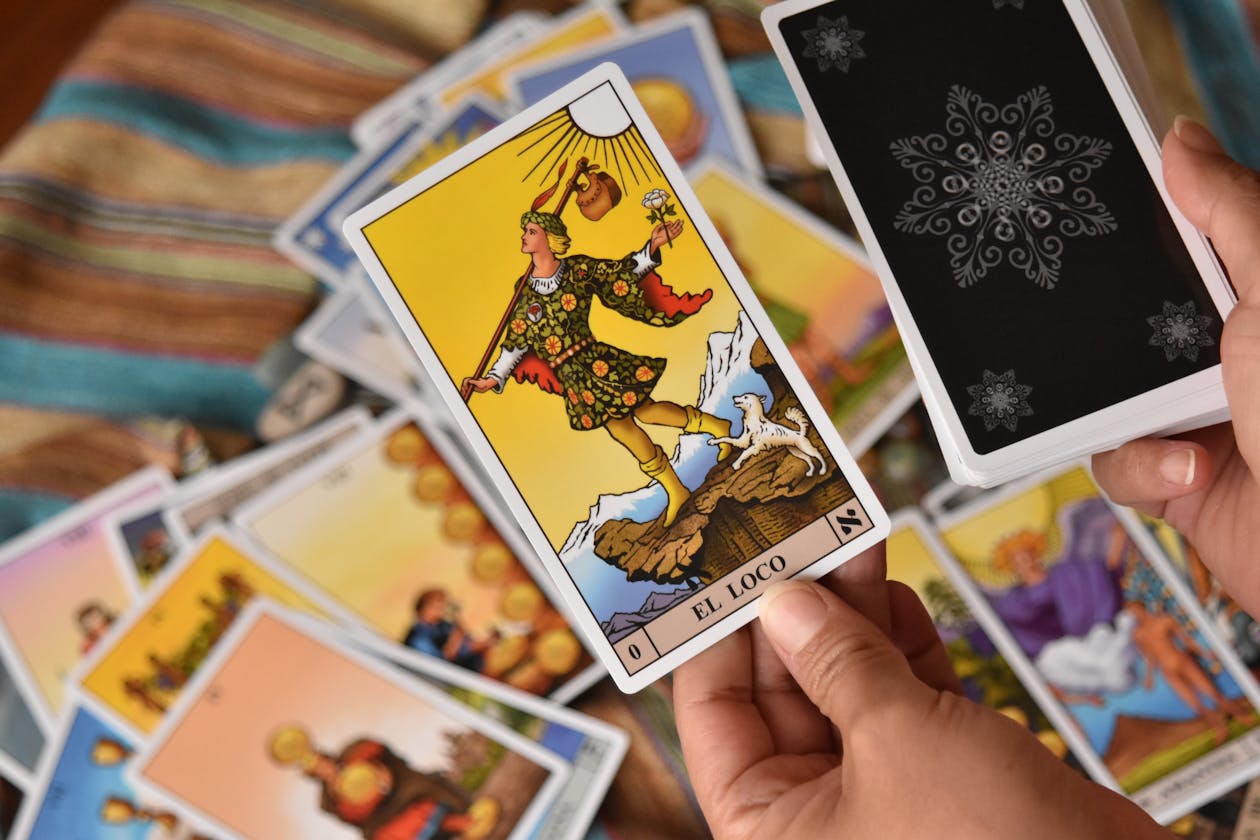
A psychologist with decades of experience studying stress, memory, and deception sits across from you at a park fundraiser. He tells you to shuffle a deck of cards he designed himself. Focus on one big question, he says — but don’t tell him what it is. Keep it entirely in your head.
He lays the cards out in a spread and begins narrating what he sees in the images. He tells a story — abstract, symbolic, open-ended. And somehow, impossibly, the reading lands. It speaks to exactly what you were thinking about. A chill runs down your spine.
This is not a scene from a paranormal documentary. It is a demonstration that Dr. Charles A. Morgan III — associate clinical professor of psychiatry at Yale School of Medicine, former medical intelligence officer for the CIA, and one of the country’s leading researchers on stress and human memory — has performed over 400 times. His goal was not to prove that tarot is magical. His goal was to show something far more interesting: your brain does all the work itself.
The phenomenon that makes this possible is called pareidolia — the brain’s involuntary tendency to perceive meaningful patterns, especially faces and familiar images, in random or ambiguous stimuli. And it sits at the heart of every tarot reading ever performed, whether the reader knows it or not.
This article explores the neuroscience of pareidolia and tarot, traces the connection to clinical projective psychology, examines why the experience feels so convincing, and asks a question that turns out to be far more interesting than “is tarot real?”: What happens when you understand the mechanism — and use it on purpose?
What Is Pareidolia? The Brain’s Pattern-Recognition Engine
Faces in Clouds, Jesus on Toast, and the Man in the Moon
Pareidolia is the brain’s involuntary tendency to perceive meaningful images — especially faces — in random or ambiguous visual stimuli. It is why people see the Virgin Mary on a grilled cheese sandwich (one famously sold to a casino for $28,000), a human face in the craters of Mars, and animals in passing cloud formations.
The word has been part of psychology for over 150 years. German psychiatrist Karl Ludwig Kahlbaum coined the term Pareidolie in 1866 in his paper “Die Sinnesdelirien” (“On Delusion of the Senses”). The word comes from the Greek para (beside, beyond) and eidolon (image, apparition) — literally, the condition of seeing an image alongside what is actually there.
But the phenomenon itself has been recognized for far longer. In the 16th century, Leonardo da Vinci described it in A Treatise on Painting as a deliberate creative technique, writing about how an artist could see “heads of men, various animals, battles, rocky scenes, seas, clouds, and woods” in random stains on a wall — and recommended this as a method for sparking inspiration.
Long before the term existed, the human brain was already doing what it does best: finding signal in noise, faces in fog, and stories in static. And when those stories come from a deck of 78 beautifully illustrated cards, the effect can feel nothing short of revelatory.
Why It’s Involuntary (And Why That Matters)
Here is what makes pareidolia so powerful: you cannot turn it off. Once someone points out the face in the electrical outlet, you will never unsee it. The perception arrives before conscious thought has a chance to intervene. This is not a failure of cognition — it is one of its oldest and most deeply embedded features.
This is precisely the mechanism that pareidolia and tarot exploit together. The cards present rich, symbol-laden imagery — a figure falling from a tower, a woman holding a lion’s jaw open, a skeleton on horseback. The brain, unable to resist finding patterns, begins constructing a narrative from what it sees. The interpretation does not come from the card. It comes from the mind of the person looking at it.
And as it turns out, neuroscience can now show us exactly where that happens — down to the millisecond.
The Neuroscience Behind Pareidolia and Tarot
Your Brain on Pareidolia — The 170-Millisecond Window
In 2014, a team led by psychologist Kang Lee at the University of Toronto conducted a landmark study whimsically titled “Seeing Jesus in Toast.” Published in the journal Cortex, the study used functional magnetic resonance imaging (fMRI) to scan participants’ brains while showing them pure visual noise — meaningless black, white, and gray patterns. Some participants were told that hidden faces might be present in the images. Others were told to look for hidden letters.
The results were striking. When participants believed they saw a face in the noise, a brain region called the right fusiform face area (rFFA) lit up — the same region that activates when viewing an actual human face. And it fired at approximately 170 milliseconds, the same temporal signature as real face recognition. The brain was not slowly reasoning its way to a face interpretation. It was detecting faces at full speed, using the same neural hardware it uses for the real thing.
This finding was confirmed by earlier work from Nouchine Hadjikhani at Massachusetts General Hospital and Harvard Medical School. Her 2009 study, published in NeuroReport, used magnetoencephalography (MEG) to demonstrate that face-like objects activate the face-specific cortex at the M170 marker — proving that pareidolia is an early perceptual process, not a late cognitive reinterpretation. The brain does not first see a random shape and then decide it looks like a face. It sees a face.
Further deepening the picture, David Alais and colleagues at the University of Sydney published a 2021 study in Proceedings of the Royal Society B showing that illusory faces produced by pareidolia are processed through the same emotional expression analysis as real faces. The brain does not merely detect a face-like shape — it reads its mood. As Alais put it: “Pareidolia faces are not discarded as false detections but undergo facial expression analysis in the same way as real faces.”
For anyone who has felt an emotional charge while gazing at a tarot card — the loneliness in the Five of Cups, the defiance in the Seven of Wands — this is why. The same neural pathways that process genuine emotional expressions are activated by the symbolic imagery on the cards. The feeling is not imaginary. It is neurologically real.
Evolution Built This — Monkeys, Infants, and Survival
Pareidolia is not uniquely human. In 2017, researcher Jessica Taubert and colleagues at the National Institutes of Health published a study in Current Biology demonstrating that rhesus monkeys experience face pareidolia with the same images that trigger it in humans. The phenomenon is, in their words, “a universal feature of the primate face detection system.”
It also emerges remarkably early in human development. A 2015 study by Masaki Kato and Ryo Mukitani, published in PLOS One, found that infants as young as 10 months old demonstrate pareidolia — perceiving face-like patterns in objects before they have had significant opportunity to learn this behavior through experience. Research using 4D ultrasound has even shown that fetuses in the third trimester preferentially orient toward face-like light configurations projected on the mother’s abdomen.
The evolutionary logic is straightforward and brutal. For most of primate history, quickly detecting a face in the shadows could mean the difference between life and death. The cost of a false negative — missing a real predator or rival — was potentially fatal. The cost of a false positive — seeing a face that was not there — was negligible. Natural selection therefore tuned the system to err on the side of over-detection.
Cognitive scientist Justin Barrett of Oxford University formalized this concept as the Hyperactive Agency Detection Device (HADD) — the idea that humans possess a hypersensitive mental mechanism for detecting agency, intention, and faces. As Kang Lee summarized: a brain that occasionally saw a face in a shadow kept its owner alive; a brain that missed an actual face in the shadows did not.
This is the hardware that tarot activates. The cards are ambiguous, symbol-rich, and often depict faces — perfect triggers for a system that evolved to find meaning in shadows.
Dopamine Turns Up the Volume
The story does not end with brain anatomy. Neurochemistry plays a critical role in modulating how aggressively the brain detects patterns.
Swiss neuropsychologist Peter Brugger of the University of Zurich has spent decades studying the neurochemistry of what he calls apophenia — the broader tendency to perceive meaningful connections in unrelated data, of which pareidolia is a visual subtype. His research, summarized in a landmark 2001 chapter, demonstrated that dopamine directly increases pattern detection.
Parkinson’s disease patients placed on dopamine agonists frequently report an increase in pareidolic experiences — seeing faces and figures where they saw none before. People in the early stages of psychosis, characterized by dysregulated dopamine, often describe the world suddenly becoming full of hidden patterns and significance. Even in healthy subjects, administering L-dopa (a dopamine precursor) makes skeptics less skeptical. As Brugger put it: “Dopamine seems to help people see patterns.”
This matters for pareidolia and tarot because readings often happen during emotionally charged moments — periods of uncertainty, transition, or crisis. These are precisely the states in which dopamine levels shift and the brain’s pattern-recognition system operates at heightened sensitivity. The cards do not need to be magical. The reader’s neurochemistry is already primed to find meaning.
Brugger’s work also revealed a fascinating continuum: the same neurochemical mechanism that drives creative insight also underlies paranormal belief and, at its extreme, the early stages of psychosis. Creativity, spirituality, and delusion are not separate categories. They sit on the same spectrum, differentiated mainly by degree and context.
The Cards as Mirrors — How Tarot Harnesses Pareidolia
Dr. Charles Morgan III — The CIA Psychologist Who Reads Tarot
If anyone is qualified to separate the real from the perceived, it is Dr. Charles A. “Andy” Morgan III. His credentials read like a character from a psychological thriller: M.D. from Loma Linda University, psychiatry residency at Yale, over 20 years on the Yale School of Medicine faculty, medical intelligence officer for the CIA from 2003 to 2010, operational psychology consultant to U.S. Special Operations Command, and author of over 100 peer-reviewed publications on stress, memory, and deception. He has testified at the International Criminal Court in The Hague.
During the COVID-19 pandemic, Morgan designed a complete 78-card tarot deck through stream-of-consciousness doodling. The deck was accepted into Yale’s Beinecke Rare Book and Manuscript Library, where it now sits alongside tarot artifacts dating back to the 15th century. He then used the deck to give over 400 live readings at a park fundraiser — using a method specifically designed to eliminate every conventional explanation for why tarot seems to work.
His rule was simple and devastating: the sitter must never reveal their question.
Ambiguity + Emotional Investment = Forced Projection
In a traditional “cold reading,” the tarot reader gathers information through subtle observation — clothing, body language, speech patterns, verbal cues, and reaction monitoring. They then use Barnum statements, fishing techniques, and subjective validation to create the illusion of specific knowledge.
By refusing to hear the question, Morgan eliminated all of these information channels. He could not fish for the topic. He could not read body language for confirmation. He could not adjust based on verbal feedback. The only variables remaining were the ambiguous visual stimuli (the cards) and the sitter’s own psychological projection.
The results were consistent and dramatic. Person after person reported that the reading addressed their exact concern — despite Morgan having zero knowledge of what that concern was. The mechanism is straightforward:
- The sitter focuses intensely on their secret question, priming their brain to find relevant patterns.
- The tarot images are deliberately symbolic and open to interpretation — perfect pareidolia triggers.
- The sitter’s brain projects their question onto the cards, constructing personal meaning from ambiguous imagery.
- When Morgan narrates what he sees, the sitter’s brain matches it to their situation automatically.
As Morgan himself explained:
“The cards don’t speak to the subject so much as the subject speaks to the cards.”
He frames the cards as essentially a Rorschach test — “Think of the cards like a Rorschach test, with myself as facilitator.” The reading is not supernatural insight. It is structured pareidolia in action.
Why the Death Card Doesn’t Mean Death
Morgan’s demonstration also highlights how the symbolic richness of tarot imagery creates space for multiple interpretations — and how emotional investment drives which interpretation the mind selects.
Consider the Death card, one of the most feared in the deck. “That freaks people out,” Morgan acknowledges. But its traditional meaning is not literal death — it is symbolic of transition, harvest, and turnover. As Morgan explains: “The death card is actually one of the more exciting cards. Its meaning is similar to ‘harvest’ or ‘turnover.’ It’s really dynamic — and quite fun.”
This multivalence is not a flaw in the system. It is the system. A card that could mean “ending,” “transformation,” “release,” or “necessary destruction” is a card that can match almost any significant life event. And the brain, primed by emotional investment, will gravitate toward the meaning that resonates most with whatever is already weighing on the mind. This is pareidolia and tarot working exactly as designed — not by magic, but by psychology.
The Rorschach Connection — Tarot as a Projective Tool
Hermann Rorschach and the Deliberate Use of Ambiguity
In 1921, Swiss psychiatrist Hermann Rorschach published Psychodiagnostik, introducing a test consisting of ten symmetrical inkblot cards — five black-and-white, two with red accents, and three in pastel colors. Subjects were asked a simple question: “What might this be?” The open-ended prompt was designed to maximize projection.
The theoretical foundation for this approach was formalized in 1939 by psychologist Lawrence K. Frank, who coined the term “projective hypothesis.” Frank proposed that when people confront ambiguous and unstructured stimuli, their responses surface personal meanings, unconscious needs, and implicit processes that are resistant to conscious misrepresentation. The ambiguity is not a defect — it is the entire mechanism.
The Rorschach test works precisely because the inkblots contain no inherent meaning. The subject must supply meaning from within. And what they supply reveals things about their internal psychological state that direct questioning often cannot reach.
What Pareidolia and Tarot Share With the Rorschach
Tarot and the Rorschach test operate on the same fundamental principle: present ambiguous stimuli and analyze what the subject projects onto them. Both rely on pareidolia as the engine that drives interpretation. Both create a structured space for unconscious material to surface.
The differences are equally instructive. Rorschach inkblots are maximally ambiguous — they contain no recognizable figures, only symmetrical ink patterns. This makes them a purer projective instrument but also more difficult to interpret. Tarot images, by contrast, are symbolically rich — they depict archetypal figures, scenes, and objects that suggest themes (a tower struck by lightning, a woman trapped in a sword-filled cage) while remaining open enough to accommodate a wide range of personal meanings.
This means tarot is actually a more accessible projective tool — one that can be self-administered, used iteratively, and engaged with repeatedly without clinical training. It is, in effect, the people’s Rorschach.
The First Doctoral Dissertation on Tarot
The comparison between tarot and established projective tests is not merely metaphorical. In 1985, clinical psychologist Dr. Arthur Rosengarten completed what is believed to be the first accredited doctoral dissertation on tarot at the California Institute of Integral Studies. His study, titled Accessing the Unconscious: A Comparative Study of Dreams, TAT, and Tarot, directly compared tarot reading with the Thematic Apperception Test (TAT) — a clinical projective test developed at Harvard in 1935 — and dream interpretation.
Rosengarten’s findings suggested that tarot could function as a legitimate projective instrument, accessing similar unconscious material as established clinical tools. He expanded this work in his book Tarot and Psychology: Spectrums of Possibility (Paragon House, 2000), arguing that tarot and psychology should be seen as complementary systems rather than conflicting ones. He continues to maintain a clinical practice integrating tarot with Jungian-oriented psychotherapy.
The Barnum Effect — And Why It Doesn’t Ruin the Reading
The Experiment That Explained Everything
In 1948, psychologist Bertram R. Forer gave what he called his “Diagnostic Interest Blank” personality test to 39 psychology students. One week later, each student received what they believed was an individualized personality sketch based on their unique responses. The sketch included statements like “You have a great need for other people to like and admire you” and “At times you are extroverted, affable, sociable, while at other times you are introverted, wary, reserved.”
Every single student received the exact same paragraph, assembled from a newsstand astrology book. They rated its accuracy at an average of 4.26 out of 5.0.
Forer published the results in 1949 as “The Fallacy of Personal Validation” in the Journal of Abnormal and Social Psychology. In 1956, psychologist Paul Meehl coined the term “Barnum effect” — named after showman P.T. Barnum’s principle of offering “something for everyone.”
In tarot, the Barnum effect operates through the multivalent nature of card meanings. The Tower can signify sudden change, destruction, revelation, liberation, or crisis. When drawn during a difficult period, the mind naturally gravitates toward the interpretation matching the sitter’s circumstances. The card did not “know” the situation. The mind did the work of making the connection.
Why Understanding the Effect Makes You a Better Reader
Here is the twist that most discussions of the Barnum effect miss: understanding the mechanism does not diminish the experience — it deepens it.
When someone believes a card is magically revealing hidden truth, they are a passive recipient of meaning. When they understand that their own mind is doing the interpretive work, they become an active participant in self-reflection. The shift is from “the cards told me” to “my mind found something here that I needed to see.” That is a fundamentally different — and arguably more empowering — relationship with the practice.
Experienced tarot users report a phenomenon that illustrates this perfectly. After months or years of regular practice, they begin to notice when a card does not fit their emotional state. And that moment of mismatch becomes the most valuable insight of the reading. A beginner draws the Three of Swords and connects it to heartbreak. An experienced reader draws it, notices it does not match how they actually feel, and asks: “Where is there a heartbreak I have not acknowledged?”
The vagueness of tarot imagery is not a flaw to be exposed. It is a feature to be understood and used deliberately.

Why We Need Meaning — The Deeper Psychology
Viktor Frankl and the Will to Meaning
The human drive to find meaning in random stimuli is not a cognitive quirk to be corrected. It is a fundamental feature of human psychology — and one that has been recognized for decades.
Austrian neurologist and psychiatrist Viktor Frankl survived four Nazi concentration camps and went on to found logotherapy, a school of psychotherapy built on the premise that the primary motivational force in human life is not pleasure (as Freud argued) or power (as Adler claimed), but the will to meaning. In his landmark 1946 book Man’s Search for Meaning, Frankl wrote that suffering ceases to be suffering the moment it finds meaning — even if that meaning is simply the decision to bear the suffering with dignity.
Frankl’s insight provides the existential backdrop for understanding pareidolia and tarot. The brain does not merely detect patterns because it evolved to survive. It detects patterns because the human mind needs meaning the way the lungs need air. Tarot provides a structured, visually rich, symbolically resonant space for that need to express itself.
Why Tarot Surges During Uncertain Times
In 2008, researchers Jennifer Whitson and Adam Galinsky published a study in the journal Science that demonstrated something remarkable: when people feel a lack of control over their environment, they become significantly more likely to perceive illusory patterns in random data. The study, titled “Lacking Control Increases Illusory Pattern Perception,” showed that participants who were made to feel powerless were more likely to see images in visual noise, perceive conspiracies in unrelated events, and detect covariation where none existed.
This finding connects directly to a broader framework known as Terror Management Theory, developed by psychologists Jeff Greenberg, Sheldon Solomon, and Tom Pyszczynski beginning in the 1980s. Building on anthropologist Ernest Becker’s Pulitzer Prize-winning book The Denial of Death (1973), TMT proposes that awareness of mortality creates existential terror that humans manage by constructing shared belief systems — cultural worldviews that provide meaning, order, and the promise of either literal or symbolic immortality.
When those worldviews are shaken — by pandemic, economic crisis, political upheaval, or personal loss — the compensatory mechanism intensifies. The brain reaches harder for patterns, for meaning, for something that makes the chaos feel intelligible. Tarot, with its rich symbolic system and its promise of insight, becomes more attractive precisely when the need for meaning is greatest.
Jung, Synchronicity, and the Truth About Tarot
No discussion of pareidolia and tarot would be complete without addressing the figure most frequently associated with the psychological study of tarot: Carl Gustav Jung. But the relationship between Jung and tarot is more nuanced than popular culture suggests.
The verified facts are these. In a 1933 seminar on active imagination, Jung described the tarot cards as “psychological images, symbols with which one plays” and noted that they contain “sort of archetypal ideas, of a differentiated nature.” In his Collected Works, he wrote that the tarot images appeared “distantly descended from the archetypes of transformation.” Around 1950, he assigned a member of his Psychology Club to research tarot as part of an experimental program exploring intuitive methods. In a 1960 letter, written one year before his death, he confirmed that the C.G. Jung Institute had begun experiments using tarot alongside astrology, geomancy, and the I Ching — but abandoned them due to insufficient staff and resources.
What Jung did not do is use tarot clinically with patients, design a tarot deck (the “Jungian Tarot” was created by Robert Wang decades after Jung’s death), or complete any formal research on the subject. Popular culture has significantly exaggerated his involvement.
Jung’s concept of synchronicity — the “meaningful coincidence of two or more events where something other than the probability of chance is involved” — remains relevant to the discussion. He proposed it as an “acausal connecting principle” in his 1952 work, developed in collaboration with physicist Wolfgang Pauli. Whether synchronicity represents a genuine feature of reality or an especially elegant example of apophenia remains one of the most debated questions in analytical psychology — one that intersects with the broader scientific study of consciousness and perception.
What is beyond debate is the phenomenon that Jung’s contemporary, Fritz Heider, demonstrated in a 1944 study with Marianne Simmel. They created a short animation of simple geometric shapes — two triangles and a circle — moving across a screen. Shown to participants, almost no one described the shapes in geometric terms. Instead, they spontaneously generated elaborate social narratives: the big triangle was a bully, the small triangle was a hero, the circle was afraid. From nothing but moving polygons, the human mind constructed a complete story with characters, motivations, and emotional stakes.
If the brain narrativizes triangles, imagine what it does with 78 cards depicting towers, moons, emperors, and lovers.
The Therapists Who Use Cards
Jessica Dore — DBT Meets Tarot
A growing number of licensed mental health professionals are integrating tarot into therapeutic practice — not as a divination tool, but as a structured reflective exercise grounded in the same principles as established projective tests.
One of the most prominent is Jessica Dore, a licensed social worker whose work has been featured in The Guardian, Vice, and The Philadelphia Inquirer. Her book Tarot for Change: Using the Cards for Self-Care, Acceptance and Growth, published by Penguin Random House, integrates principles from dialectical behavior therapy (DBT) with tarot practice. Dore connects specific cards to psychological concepts: the Five of Cups to cognitive flexibility, the Sun card to healthy responses to rejection, the Tower to radical acceptance of unwanted change.
Dore’s framing is deliberately non-mystical. “Tarot is a set of metaphors that can help somebody understand something,” she has said. She invokes the work of Jungian analyst James Hillman, who defined “psychologizing” as reflecting on experience through images and metaphors rather than literal language. In this framework, tarot is not predicting the future — it is providing a vocabulary for the present.
A Growing (If Controversial) Movement
Dr. Arthur Rosengarten maintains a clinical practice in California that integrates tarot with Jungian-oriented psychotherapy. Licensed counseling centers including Juniper Tree Counseling (serving Pennsylvania, New Jersey, and Florida) and Insight Counseling Collective in Seattle now explicitly offer tarot-assisted therapy alongside evidence-based approaches like EMDR and Internal Family Systems.
It is important to note the limits of the current evidence base. No randomized controlled trials have been published validating tarot as a clinical tool. The academic literature consists of dissertations, theoretical papers, case studies, and expert opinion pieces. Anyone considering tarot as a complement to therapy should discuss it with a licensed provider and approach it as a reflective practice rather than a diagnostic instrument.
Still, the trajectory is clear. As the psychological mechanisms behind tarot become better understood — through research on pareidolia, projective testing, and narrative therapy — the gap between “tarot is mystical nonsense” and “tarot is a structured projective exercise with real psychological effects” continues to narrow.
Frequently Asked Questions
What is pareidolia and how does it relate to tarot?
Pareidolia is the brain’s automatic tendency to perceive meaningful images — especially faces — in random or ambiguous stimuli, such as seeing faces in clouds or animals in rock formations. In tarot, pareidolia drives the interpretation of card imagery: the brain involuntarily constructs personal meaning from the symbolic images, making each reading feel specific and relevant to the individual’s concerns.
Why do tarot cards feel so accurate even for skeptics?
Tarot feels accurate because of three converging mechanisms. Pareidolia forces the brain to find patterns in the card imagery. Emotional priming — focusing on a personal question before the reading — biases the brain toward finding relevant interpretations. And the Barnum effect ensures that vague, multivalent card meanings can be matched to almost any life situation. Together, these create a powerful subjective experience of accuracy that operates regardless of whether the person believes in the cards.
Is tarot reading real or just psychological projection?
That depends on how you define “real.” Tarot reading is not fortune-telling — there is no evidence that the cards predict future events. But the psychological experience is genuine: neuroscience shows that the same brain regions activate when interpreting symbolic cards as when processing real emotional stimuli. Tarot functions as a projective tool, similar to the Rorschach inkblot test, that surfaces unconscious thoughts and feelings. The insight is real, even if the mechanism is psychological rather than supernatural.
What part of the brain is responsible for pareidolia?
The primary brain region involved is the fusiform face area (FFA), located in the fusiform gyrus of the temporal lobe. According to Kang Lee’s 2014 fMRI study at the University of Toronto, the FFA activates at approximately 170 milliseconds when viewing face-like patterns — the same speed as recognizing a real face. Additional regions include the prefrontal cortex (top-down expectations), the occipital face area (early visual processing), and the amygdala (emotional evaluation). The system involves both bottom-up sensory input and top-down expectation, working together in under a quarter of a second.
How is tarot similar to the Rorschach inkblot test?
Both tarot and the Rorschach test work by presenting ambiguous visual stimuli and analyzing what the subject projects onto them. Both rely on pareidolia as the underlying cognitive mechanism. Both are grounded in the projective hypothesis — the idea that responses to ambiguous stimuli reveal unconscious psychological material. The key difference is that Rorschach inkblots are maximally ambiguous with no intended meaning, while tarot cards contain rich symbolic imagery that suggests themes while remaining open to interpretation. Tarot can be thought of as a more accessible, self-administered version of the same psychological principle.
Conclusion — The Card Doesn’t Hold the Answer
Understanding pareidolia does not make tarot meaningless. It does something better: it reveals what tarot has been all along — a mirror, a projective tool, a structured space for the mind to encounter itself.
The Rorschach inkblot test has been used in clinical psychology for over a century, and no one dismisses it as “just seeing things that aren’t there.” The entire point is seeing things that aren’t there — because what you see reveals what you carry inside. Tarot operates on the same principle, with richer imagery, deeper symbolic resonance, and the advantage of being accessible to anyone willing to sit down with a deck of cards and an honest question.
The neuroscience is clear. The fusiform face area fires at 170 milliseconds, before conscious thought can intervene. Dopamine modulates the sensitivity of the pattern-recognition system. Infants and monkeys share the capacity. This is not a cognitive bias to be corrected — it is an evolutionary feature to be understood and, perhaps, used with intention.
As Dr. Charles Morgan III put it, the biggest misconception about tarot is that people think “it is something that is outside of themselves.” It is not. The meaning has always come from within.
The card doesn’t hold the answer. You do. You always did.
The next time you pull a card — whether you believe in it or not — notice what your eye lands on first. Not what the guidebook says it means. Not what a reader tells you. What you see, before you have time to think. That flash of recognition, that involuntary flicker of “yes, that’s it” — that is pareidolia doing what it evolved to do. The question is not whether the pattern is real. The question is: why did your mind choose that one?
Leave a Reply